Call us now :08037736502
 Send Inquiry
 Send Inquiry
Flow Diversion Valves
Price 10000 INR/ Piece
MOQ : 1 Piece
Flow Diversion Valves Specification
- Valve Size
- DN25, DN40, DN50, DN65, DN80, DN100
- Control System
- Pneumatic actuator, manual, or electric control
- Valve Type
- Flow Diversion Valve
- Features
- Easy to operate, hygienic design, CIP/SIP capable, low maintenance
- Connection Type
- Tri-clamp, threaded, or weld end connections
- Material
- AISI 304/316L Stainless Steel body
- Usage
- Industrial
- Sealing
- EPDM, PTFE, or FKM gasket/seals
- Structure
- Three-way or multiple port valve with flow diversion capability
- Voltage
- 24V/110V/220V AC/DC for actuator control
- Application
- Ideal for hygienic and aseptic process applications, commonly used in dairy, beverage, and pharmaceutical industries.
- Type
- Diversion Valves
- Power
- Pneumatic or manual actuation available
- Pressure
- Max. working pressure up to 10 bar (145 psi)
- Media
- Liquids, semi-liquids, and process fluids
- Product Type
- Diversion Valves
- Port Size
- DN25 to DN100 (1 to 4)
- Temperature
- -10°C to 130°C (14°F to 266°F)
- Disc
- Stainless steel, precision-machined
- Pin
- As per standard design, typically stainless steel
- End Connection
- SMS/DIN/IDF/Triclamp
- Finish
- Mirror polished inner and matt outer finishes for hygiene
- Actuation Time
- Approx. 1 second (pneumatic)
- Leakage
- Zero leakage design with double lip seals
- Mounting
- Any orientation possible
- Compliance
- Meets FDA, 3A sanitary standards
- Surface Roughness
- 0.8 m (Ra)
- Operation
- Single or double seat design, with or without feedback position sensor
- Weight
- Varies as per size, approx. 4-22 kg
Flow Diversion Valves Trade Information
- Minimum Order Quantity
- 1 Piece
- Supply Ability
- 1 Piece Per Month
- Delivery Time
- 1 Months
- Main Export Market(s)
- Asia, Australia, North America, Eastern Europe, Western Europe, Middle East, Central America, Africa
- Main Domestic Market
- All India
About Flow Diversion Valves
Flow Diversion Valves
With quality control as our religious commitment, we have excelled in many component designs over the years. Dairy Pharmas rapid growth in the domestic and global markets is testimony to the dedication of our engineers and team. Together with our unflinching loyalty towards high end production standards we have made a reputation for ourselves in the field of flow diversion valves.
Some core features of Flow Diversion Valves:
- Made from SS 316/304 with surface roughness bellow 240 grit.
- Both the stem and body bonnet have product protection chambers
- Steam and sterilizing media can be circulated through the valve preventing bacteria in product contact areas
- Our valves are fabricated from SS 316/304
- The valves bear surface roughness bellow 240 grit
- The gasket and `O rings are of EPDM, Silicon or Viton and seat of Silicon.
Technical Specification
| Minimum Order Quantity | 1 Piece |
| Medium used | Liquid |
| Material | Stainless Steel |
| Pressure | 4-6 Kg |
| Color | Silver |
Superior Hygiene and Compliance
Flow Diversion Valves are designed with a mirror-polished inner surface and a matt outer finish, delivering outstanding hygiene for aseptic processes. Compliant with FDA and 3A sanitary standards, these valves are suitable for applications demanding strict cleanliness, such as dairy, beverage, and pharmaceutical manufacturing.
Versatile Design and Operation
Featuring single or double seat designs, optional feedback position sensors, and three-way or multiple port structures, Flow Diversion Valves adapt to a range of operational requirements. Their robust construction allows mounting in any orientation and supports quick actuationaround one secondvia pneumatic control.
Dependable Sealing and Easy Maintenance
Precision-engineered with EPDM, PTFE, or FKM gaskets and double lip seals, these valves assure zero leakage. The modular design ensures straightforward operation, low maintenance, and compatibility with CIP/SIP cleaning systems, making them a preferred choice for plant reliability and efficiency.
FAQs of Flow Diversion Valves:
Q: How do Flow Diversion Valves ensure hygiene and prevent contamination in process applications?
A: Flow Diversion Valves are crafted with a mirror-polished inner surface, minimizing residue and bacterial growth. Their design meets FDA and 3A standards, with zero leakage features and high-quality seals, making them ideal for aseptic and hygienic applications.Q: What connection types and sizes are available for Flow Diversion Valves?
A: The valves support SMS, DIN, IDF, and Triclamp end connections, and are offered in sizes ranging from DN25 to DN100 (1 to 4 inches), allowing flexibility in installation across various process pipelines.Q: When should I choose a single versus double seat design, and do these options support position feedback?
A: Single seat designs are suitable for basic flow diversion, while double seat designs enhance sealing and allow for handling media with stricter hygienic requirements. Both configurations are available with or without feedback position sensors for process monitoring.Q: Where can Flow Diversion Valves be installed within my facility?
A: Thanks to their universal mounting capability, these valves can be installed in any orientation throughout dairy, beverage, or pharmaceutical plants, providing reliable flow control wherever hygienic diversion is necessary.Q: What is the operation process for Flow Diversion Valves, and how fast is the actuation?
A: These valves can be actuated manually, pneumatically, or electrically. When pneumatic actuation is used, the typical response time is approximately 1 second, supporting rapid and reliable flow switching during operations.Q: What are the usage benefits of Flow Diversion Valves in industrial process applications?
A: They offer safe and hygienic flow diversion, reduce maintenance downtime due to easy operation and cleaning capabilities (CIP/SIP), prevent leakage, and maintain process integrity in demanding environments like dairies, beverage manufacturers, and pharmaceutical plants.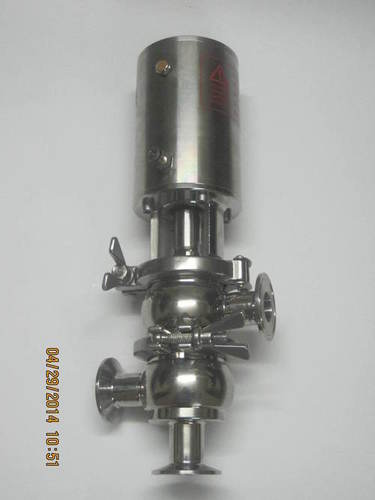
Tell us about your requirement

Price:
Quantity
Select Unit
- 50
- 100
- 200
- 250
- 500
- 1000+
Additional detail
Mobile number
Email


 Send Inquiry
Our Products
- Purified Water Generation systems
- Purified Water Distribution Systems
- Electropolished Tubes & Fittings
- Centrifugal Pumps / Lobe Pumps
- Cleaning Equipments
- Industrial Water Filters
- Industrial Valves
- Hoses and Bellows
- Stainless Steel Turned Components
- Tank Reactor
- Electropolished Sanitary Fittings
- Caster Wheels
- WATER TREATMENT SYSTEM SPARES
- Stainless Steel Industrial Valves
- Stainless Steel Fabrication
- Pumps Filters and Accessories
- Zero Dead Leg Valves
- Triclover Butterfly Valve
- Triclover Ball Valve
- Flow Diversion Valves
- Iris Valves
- Orbital Welding Machine
- Strainers
- Sanitary GMP Drain Traps
- Stainless Steel Storage Tanks
- Ultraviolet Systems
- Electropolishing Services
- Filters & Strainers
- Pneumatic Diaphragm Valves
- Victaulic Coupling


Unit No. 124, Raj Ratan Indl. Est., Opp. S.N.D.T. Girls College, B. J. Patel Road, Malad (W),Mumbai - 400064, Maharashtra, India

Mr. Jignesh V. Shah
(DIRECTOR)
Mobile :08037736502
 Send Inquiry
 Send SMS
 Call Me Free
Developed and Managed by Infocom Network Private Limited.
